

La famille Linley (8/8)
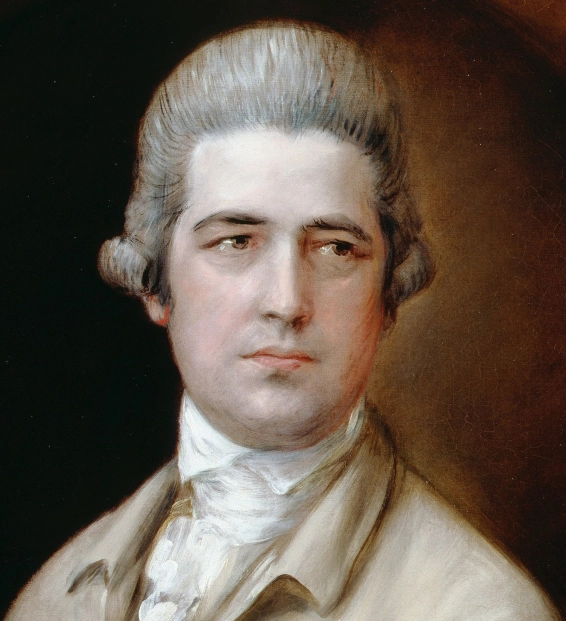 Portrait de Thomas Linley l'aîné, huile sur toile de Thomas Gainsborough, dans les années 1760, Dulwich Picture Gallery.
Annexes : Catalogue des œuvres de Thomas Linley l’Aîné ; Catalogue des œuvres de Thomas Linley le Jeune ; Bibliographie.
Catalogue des œuvres de Thomas Linley l’Aîné
Opéra-comique (pastoral opera) en trois actes The Royal Merchant créé le 14 décembre 1767 à Covent Garden, texte de Thomas Hull. C’est une adaptation d’une pièce élisabéthaine de Beaumont et Fletcher intitulée Beggar's Bush.
Elegies for Three Voices (et basse continue), with an Accompaniment for a Harpsichord and Violoncello, composées à Bath, publiées à Londres vers 1770.
The Duenna (en collaboration avec son fils Thomas), 1775.
Opéra-comique (aussi appelé « romance dramatique ») Selima and Azor en trois actes, texte de Sir George Collier, (essentiellement une adaptation de Zemire et Azor de Grétry), 5 décembre 1776, première œuvre créée par Linley en tant que directeur musical du Théâtre Royal de Drury Lane.
Contribution à la musique de la chanson de la comédie en cinq actes School for Scandal de R. B. Sheridan, 1777.
Nouveaux accompagnements pour les airs du Beggar's Opera pour une production du 8 novembre 1777.
Mise en musique des parties à chanter pour la Monody on the Death of Garrick de Sheridan, 1777.
The Camp, « divertissement musical » sur un « jeu d'esprit » satirique de Richard Tickell, son gendre écrit par Sheridan sur un camp d’entraînement militaire pendant l’été 1778 à Coxheath en prévision d’une invasion militaire française qui n’eut jamais lieu, octobre 1778.
Twelve Ballads Set to Music, pour voix, clavecin et basse chiffrée, Londres, 1780.
The Gentle Shepherd, opéra-ballade d’après la comédie pastorale écossaise d’Allan Ramsay. Linley compose l’ouverture et en arrange la musique déjà existante pour plusieurs voix et orchestre, Drury Lane, 1781. Richard Tickell crée sa propre version en 1789 pour le même théâtre. Il n’est pas exclu que le troisième mouvement de l’ouverture soit une adaptation d’un mouvement d’un des concertos perdus de Tom Linley le Jeune.
The Carnival of Venice, opéra-comique en trois actes, texte de Richard Tickell, créé le 13 décembre 1781 à Drury Lane. Elizabeth Ann et Mary Linley-Tickell ont contribué à la composition.
Robinson Crusoe; or, Harlequin Friday, une « pantomime/harlequinade », texte de Sheridan d’après le roman (1719) de Daniel Defoe, 29 janvier 1781 à Drury Lane.
The Triumph of Mirth; or, Harlequin's Wedding, pantomime, livret de Thomas King, 26 décembre 1782 à Drury Lane comme afterpiece. Thomas le Jeune y a vraisemblablement collaboré.
Opéra-comique The Spanish Maid, Drury Lane, 1783.
The Spanish Rivals, farce en deux actes jouée en afterpiece, libretto attribué à Mark Lonsdale, Drury Lane, 4 novembre 1784.
Faisant partie de l’œuvre ci-dessus, le rondeau Still the Lark finds Repose, est publié par S.A. & P. Thompson à Londres c. 1784.
Opéra-comique Tom Jones, c. 1785, peut-être commencé par son fils, Thomas le Jeune et terminé par l’Aîné. Le texte est inspiré de The History of Tom Jones, a Foundling (1749) de Henry Fielding.
The Strangers at Home, opéra-comique en trois actes, livret de James Cobb,Théâtre Royal de Drury Lane,1786.
Richard Cœur de Lion : An historical romance (adapté de Grétry), 1788.
Love in the East, or, Adventures of Twelve Hours, opéra-comique en trois actes, livret de James Cobb,Théâtre Royal de Drury Lane, 1788.
N. B. Sa veuve a publié à Londres en 1800 un recueil posthume en deux volumes de ses œuvres et de celles de son fils Thomas, The Posthumous Vocal Works of Mr. Linley and Mr. T. Linley, malheureusement sans préciser auquel des deux chacune était due. Il comprend des chansons, glees, madrigaux, élégies et cantates. On trouve également quelques chansons à plusieurs voix dans le manuscrit MS. 31415 du British Museum. Sont attribuées à Thomas Linley l’Aîné de façon relativement certaine diverses chansons séparées, glees, canzonette et cantates telles que « Ah could you possibly know », « The lark sings high in the cornfield » et « Awake, my lyre ». D’autres font toujours l’objet d’une contestation entre lui et son fils tel que Sling the flowing Bowl, à la fois chant de marin et chanson à boire pour trois voix d’hommes a cappella (TTB) sur un texte attribué à Charles Dibdin ou à Richard Brinsley Sheridan et dont la forme tripartite ab/cd/ed’ et la structure en 2x8 mesures/bis/10mesures en 6+4 offrent quelque intérêt.
Catalogue des œuvres de Thomas Linley le Jeune
Selon Linda Troost, six sonates (vers 1768) sont perdues. Une seule a survécu, la sonate pour violon et basse continue en la majeur, 1769, parfois appelée « la settima sonata ».
Concerto pour violon et orchestre en fa majeur en trois mouvements (Moderato-Adagio-Rondeau), vers 1771-1773. Une vingtaine d’autres concertos pour violon écrits avant 1775 sont perdus. Voir cependant ci-dessus The Gentle Shepherd de Thomas Linley l’Aîné.
Au moins 3 cantates pour soprano et orchestre :
In yonder grove, pour soprano, hautbois et orchestrecomposée entre 1768 et 1773 sur des paroles de sa sœur Elizabeth et créée par elle en mars 1773, en six mouvements (1. Récitatif – 2. Air « If thy too cruel bow be bent » – 3. Récitatif – 4. Marche – 5. Récitatif – 6. Air « Tune Philomel ») ;
Ye nymphs of Albion's beauty-blooming isle, pour soprano, cor français et orchestrepeut-être aussi sur des paroles d’Elizabeth eten 4 mouvements (1. Récitatif – 2. Air « Wrapt close from harm » – 3. Récitatif – 4. Air « Damon to yon secret grove »), composée entre1768 et 1776 c. mais publiée seulement en 1800 c. ;
et Darthula, daughter of heav'n, fair art though) en sept mouvements (1. Récitatif « Daughter of heav'n, fair art though » pour soprano et orchestre – 2. Air « But why dost thou retire – 3.Récitatif – 4. Air « My arm shall lift the spear » – 5.Récitatif – 6. Air « When in thy beauty wilt thou rise » – 7. Arioso Retire, O Sun ») dont les paroles sont tirées de Darthula de James Macpherson dans son édition de 1765 de l’œuvre The works of Ossian the Son of Fingal où la plupart des poèmes ne sont pas d’Ossian mais de lui-même.
Un anthem, Let God arise ! (psaume 68) pour 2 sopranos, ténor, basse, chœur et orchestre composé pour le festival de Worcester de septembre 1773.
L’ouverture, un duo, un trio et trois des quatre airs de l’opéra-comique La Duègne, 1775.
A Lyric Ode on the fairies, aerial beings, and witches of Shakespeare or The Shakespeare Ode pour 2 sopranos, ténor, basse, chœur et orchestre.Libretto de Franch Lawrence (ou Laurence). Drury Lane, 20 mars 1776.
Musique de scène de Macbeth, Drury Lane, vers 1776. Accompagnements supplémentaires pour instruments à vent (hautbois, clarinettes, bassons et cors) pour cette œuvre, même date.
Nouvelle musique de scène pour The Tempest de Shakespeare, en sept mouvements, livret de Sheridan d’après Shakespeare, Drury Lane, 4 janvier 1777.
Un court oratorio, The Song of Moses (and Israel), composé pour Drury Lane sur un livret de John Hoadly, le chapelain du prince de Galles, basé sur le chapitre 15 de l'Exode, 1777.
Une chanson (« Ah! Ma'am, the Regina... ») composée pour la comédie de mœurs The School for Scandal (L’Ecole de la médisance) de Sheridan (1777).
Un glee à cinq voix (SSATB) en sol majeur, Hark! the bird's melodious sing, composé à la requête de sa sœur, Elizabeth Sheridan, qui y chantait habituellement la partie supérieure, date inconnue mais entre 1775 et 1778. Partition éditée par Thomas Warren comme « madrigal » chez Longman & Broderip dans A Twenty fifth Collection of Catches, Canons and Glees for three, four and five voices.
Le glee ou élégie pour trois voix et basse continue« To heal the wound a bee had made »contenu dans The Posthumous Vocal Works of Mr. Linley and Mr. T. Linley lui est attribué.
Let me, careless and unthoughtful lying, autre glee (« madrigal ») à 5 voix (SATBB), texte d’Abraham Cowley (1618-1667), accompagnement de piano ad. lib., The Regent Harmonic Institution, Londres.
Un opéra-comique, The Cady of Bagdad, Texte d’Abraham Portal, Drury Lane, février 1778, afterpiece ; seule l’ouverture en trois mouvements a survécu.
Verses to the Memory of Garrick (libretto de R. B. Sheridan), récités avec des passages musicaux pour voix solo et chœur. Non daté.
N. B. Il n’est pas exclu que les opéras The Spanish Maid (1783), Strangers at Home (1785) et Tom Jones (c. 1785) attribués à son père aient été ébauchés par Thomas le Jeune avant sa mort en 1778.
N. B. Il a aussi peut-être collaboré de son vivant à The Triumph of Mirth; or, Harlequin's Wedding, une pantomime sur un livret de Thomas King créée le 26 décembre 1782 à Drury Lane comme afterpiece 4 ans après sa mort.
N. B. La plupart des œuvres musicales de Linley le Jeune sont rassemblées dans le recueil posthume de celles de son père et des siennes publié en 1800. On y compte au moins 13 cantates, glees, madrigaux, élégies et chansons dont le détail figure dans ce catalogue sous leur titre lorsque c’est possible. Ci-dessous les œuvres séparées pour lesquelles ce n’est pas le cas :
When gay Philander (3 voix et basse)
Why steals from my bosom (3 voix et basse)
To heal the wound (3 voix et basse)
No other love (3 voix et basse)
Madrigal présenté par Sheridan au Catch Club : "Hark! Hark! The birds", sol majeur (5 voix a cappella)
Alinda's form as I survey. Madrigal (4 voix a cappella)
Primroses deck the bank's green side. Chanson.
N. B. A Monody (after the manner of Milton’s Lycidas) on the Death of Mr. Linley, who was drowned August 5th, 1778 a été publiée anonymement à Londres en 1778.
Bibliographie en anglais
Aberdeen Weekly Journal.
Bath Chronicle and Weekly Gazette.
Drewry's Derby Mercury.
Ipswich Journal.
Jackson's Oxford Journal.
New Grove Dictionary of Musique and Musicians, 2ª Ed. (2001).
British Newspaper Archive.
Oxford Dictionary of National Biography (Oxford University Press, 2004)
Dictionary of National Biography, 1885-1900. Articles sur différents membres de la famille Linley.
The British Library.
Library of The Royal Academy of Music.
[Rudolph Ackermann], The Microcosm of London, 3 vols (London: Ackermann, 1808-10).
The Gentleman's Magazine, 1825, Vol. 95.
The Gentleman's Magazine, Jan-Jun 1835 (including Bowles' Recollections of the late William Linley, Esq., pp. 574-576, June 1835).
The Sphere on 20 November 1940.
The Times, no. 53447, p. 10, 6 February 1956.
Western Daily Press, vol. 185, no. 30546, p. 6, 10 November 1950.
ADAMS, Joseph Quincy, Jr (June 1910). "The Text of Sheridan’s The Rivals". Modern Language Vol. 25, N°6, Notes: 171–173,
ANGELO, Henry (1830), Reminiscences of Henry Angelo: With Memoirs of His Late Father and Friends, vol. 2, Colburn and Bentley.
ASPDEN, Suzanne, "Linley, Thomas (1733–1795)", Oxford Dictionary of National Biography (online ed.), Oxford University Press,
ASPDEN, Suzanne (2015), "Sancta Cæcilia Rediviva. Elizabeth Linley: Repertoire, Reputation and the English Voice", Cambridge Opera Journal, 27 (3): 263-287.
ASPDEN, Suzanne (2004). "Ozias Thurstan Linley". Dictionary of National Biography. Oxford University Press.
ASPDEN, Suzanne (2004), "Linley [Sheridan], Elizabeth Ann (1754–1792)", Oxford Dictionary of National Biography (online ed.), Oxford University Press.
AUBURN, Mark. 'Theatre in the age of Sheridan and Garrick' in James Morwood and David Crane (eds) Sheridan Studies (Cambridge: Cambridge University Press, 1995).
BECKETT, Wendy (1994), The Story of Painting, The Essential Guide to the History of Western Art, Dorling Kidersley, ISBN 978-0751301335.
BEECHEY, Gwilym. (1968). ‘Thomas Linley, Junior. 1756–1778’. The Musical Quarterly, 54(1), 74–82.
BEECHEY, Gwilym. ‘Thomas Linley, Junior: his Life, Work and Times’ (diss., U. of Cambridge, 1965).
BEECHEY, Gwilym. ‘Thomas Linley, Junior, 1756–1778’, MQ, 54 (1968).
BEECHEY, Gwilym. ‘Thomas Linley, 1756–78, and his Vocal Music’, MT, 119 (1978).
BELL, John. La Belle Assemblée, Bell's Court and Fashionable Magazine Addressed Particularly to the Ladies)
BILLINGTON, Michael. “The Duenna’s 230-year elopement”. The Guardian. Retrieved 30 September 2010.
BLACK, Clementina (1911). The Linleys of Bath. Martin Secker. (1926). New York: Minton, Balch & Co. (online ed., 1926).
BLESSINGTON, Marguerite and LORD BYRON, George Gordon. A Journal of the Conversations of Lord Byron with the Countess of Blessington (1893).
BOADEN, James. Memoirs of Mrs Siddons: Interspersed with anecdotes of authors and actors (1827). Philadelphia: H. C. Carey & I. Lea, and E. Littell and G. & C. Carvill, New York.
BOR, Margot; CLELLAND, Lamond (1962), Still the Lark: A Biography of Elizabeth Linley, Merlin Press.
BREWER, David A. (2012), Introduction, The Rivals and Polly Honeycombe, by Sheridan, Richard B.; Colman the Elder, George, Brewer, David A. (ed.), Broadview Press.
BURNEY, Charles (1819), Rees’s Cyclopædia, vol. 32, Longman, Hurst, Rees, Orme and Brown.
BURNEY, Charles (1959). An eighteenth-century musical tour in France and Italy, being Dr. Charles Burney's account of his musical experiences as it appears in his published volume with which are incorporated his travel experiences according to his original intention. Oxford University Press.
CAMDEN, Carroll. ‘Songs and Choruses in The Tempest’, Philological Quarterly, 61 (1962).
CHEDZOY, Alan (1998). Sheridan's Nightingale. Allison & Busby.
CHRISTIANSEN, Rupert (14 October 2010). "The Duenna, English Touring Opera, Linbury Studio, review". Daily Telegraph. ISSN 0307-1235. Retrieved 17 January 2019.
COOKE, Matthew (1812). A Short Account of the Late Mr. Thomas Linley, Junior.
CORNWELL BARON-WILSON, Mrs. Memoirs of Miss Mellon, Afterwards Duchess of St. Albans, in two volumes [1886] Paperback – June 24, 2016.
COWGILL, Rachel (1999), "Linley family", in Iain McCalman; Jon Mee; Gillian Russell; Clara Tuite; Kate Fullagar; Patsy Hardy (eds.), An Oxford Companion to the Romantic Age, Oxford University Press,retrieved 24 December 2014.
CREEVEY, Thomas. The Creevey papers, a selection from the correspondence & diaries of the late Thomas Creevey, M. P., born 1768-died 1838; ed. by the Right Hon. Sir Herbert Maxwell (1904). E. P. Dutton & Company.
DAHN, Jo (September 2000), "Mrs Delany: biography, Interpreting Ceramics, Interpreting Ceramics": Research Collaboration (1).
DELANY, Mary (1862), Lady Llanover (ed.), The Autobiography and correspondence of Mary Granville, Mrs. Delany, vol. 1, R. Bentley.
EGER, Elizabeth, "Bluestocking circle [bluestockings] (act. c.1755-c.1795)", Oxford Dictionary of National Biography (online ed.), Oxford University Press, retrieved 10 February 2018 (Subscription or UK public library membership required.)
EVANS, Rian (3 November 2014). "Betrothal in a Monastery review – humour survives concert performance". The Guardian. ISSN 0261-3077. Retrieved 17 January 2019.
FELTHAM, John. The Picture of London for 1810 (1810).
FELTHAM, John. The Picture of London for 1818 (1818).
FISKE, Roger. English Theatre Music of the Eighteenth Century (London, 1973) p. 414.
FISKE, Roger. ‘A Score for The Duenna’, ML, 42 (1961).
FISKE, Roger. 'The Duenna,' in The Musical Times Vol. 117. (Musical Times Publications: March 1976).
GUTMAN, Robert (2000). Mozart: A Cultural Biography. London: Harcourt Brace. ISBN:978-0-15-601171-6. OCLC:45485135.
HARTNOLL, Phyllis (1983), The Oxford Companion to the Theatre, Oxford University Press.
HEAD, Matthew (2013), Sovereign Feminine: Music and Gender in Eighteenth-Century Germany, University of California Press.
HIGHFILL, Philip H.; Burnim, Kalman A.; Langhans, Edward A. (1991), A Biographical Dictionary of Actors, Actresses, Musicians, Dancers, Managers & Other Stage Personnel in London, 1660-1800, (16 vols., especially vol. 13), Southern Illinois University Press.
JEFFARES, Norman A. (2004), "Sheridan, Richard Brinsley (1751–1816)", Oxford Dictionary of National Biography (online ed.), Oxford University Press.
JOHNSTONE, H. DIAK and FISKE, Roger eds.: Music in Britain: the Eighteenth Century (Oxford, 1990).
KALINSKY, Nicola (1988), Elizabeth Linley (1754–1792), A Nest of Nightingales, by Waterfield, Giles, Dulwich Picture Gallery.
KALINSKY, Nicola (1988), Maria Linley (1763–1784), A Nest of Nightingales, by Waterfield, Giles, Dulwich Picture Gallery.
KELLY, Michael (1968). Reminiscences of Michael Kelly of the King's theatre and Theatre Royal Drury Lane. New York, Da Capo Press.
MCGRADY, Richard (01 May 1996). "The Elegies of William Jackson and Thomas Linley the Elder".Music and Letters, Volume 77, Issue 2, May 1996, pp. 209–227.
MIKHAIL, Edward Halim (1989), Sheridan: Interviews and Recollections, Springer.
A MONODY (after the manner of Milton's Lycidas) on the death of Mr. Linley; who was drowned August the 5th, 1778, in a c* at Grimpsthorpe, in Lincolnshire, the Seat of his Grace the Duke of Ancaster. Wilkie. 1778.
MOORE, Thomas. Memoirs of the Life of the Right Honourable Richard Brinsley Sheridan, 2 Vol., Longman, Hurst, Rees, Orme, Brown, and Green. October 1825.
MORWOOD, James. The Life and Works of Richard Brinsley Sheridan (Edinburgh: Scottish Academic Press, 1985).
MORWOOD, James and CRANE, David (eds). 'Theatre in the age of Sheridan and Garrick'. Sheridan Studies (Cambridge: Cambridge University Press, 1995).
MOZART Letters and Documents (Mozart Briefe und Dokumente) – Online Edition.
MULLER, Julia. (1994), Music as meaning in the Tempest, in Reclamations of Shakespeare (Volume 15 of the DQR Studies in Literature series).
NUSSBAUM, Felicity, (2011) Rival Queens: Actresses, Performance, and the Eighteen-Century British Theatre, University of Pennsylvania Press.
O'TOOLE, Fintan. A Traitor's Kiss: The Life and Works of Richard Brinsley Sheridan (London: Granta Books, 1998).
Parke, William t. (1830), Musical Memoirs. An account of the General State of Music in England, Henri Colburn & Richard Bentley, London.
RHODES, R. Crompton (1933), Harlequin Sheridan, the Man and the Legends: With a Bibliography and Appendices, Blackwell.
RITCHIE, Leslie (2017), Women Writing Music in Late Eighteen-Century England: Social Harmony in Literature and Performance, Taylor & Francis.
ROACH, Joseph (2013), "Mistaking Earth for Heaven: Eliza Linley's voice", Bluestockings Displayed: Portraiture, Performance and Patronage, 1730–1830, by Eger, Elizabeth, Cambridge University Press.
SADIE, Stanley (1963), "Charming People (review)", The Musical Times, 104 (1442): 261.
SANDS, Mollie. “The Singing-Master in Eighteenth-Century England.” Music & Letters, vol. 23, no. 1, 1942.
SANDS, Mollie. “The Teaching of Singing in Eighteenth Century England.” Proceedings of the Musical Association 70th Sess, 1944 1943.
SAVAGE, Gail (2015), "The Poisoned Apple", Female Beauty Systems: Beauty as Social Capital in Western Europe and the United States, by Adams, Christine and Adams, Tracy, Cambridge Scholars Publishing.
SCOTLAND, Tony (2022). Tomassino: The Enigma of the English Mozart, Shelf Lives.
SICHEL, Walter (1909), Sheridan, from new and original material including a manuscript diary by Georgiana Duchess of Devonshire, vol. 1, Constable.
STEINMETZ, Andrew (1868), The Romance of Dueling in All Times and Countries, Chapman and Hall.
THALER, Alvin (1922). Shakespeare to Sheridan: A Book About the Theatre of Yesterday and Today.
THE DUENNA, a comic opera in three acts by Richard Brinsley Sheridan, with an introduction by Nigel Playfair, and illustrated with the designs for costumes and scenery used in the production at the Lyric Theatre Hammersmith and other drawings by George Sheringham (Constable & Co. Ltd., London 1925).
THOMSON, Peter (2004). "Sheridan, Thomas (1719?-1788)". Oxford Dictionary of National Biography (online ed.) Oxford University Press.
THORNBURY, Walter. Old and New London, Cassell, Petter & Galpin, London, 1878.
TROOST, Linda V. (1986). "The Characterizing Power of Song in Sheridan's The Duenna". Eighteenth Century Studies. Vol. 20 (2): 153–172.
VAN THAL, Herbert (Ed.), Solo Recital – The Reminiscences of Michael Kelly (Folio Society, London 1972).
WATERFIELD, Giles (1988), A Nest of Nightingales, Dulwich Picture Gallery.
WATKINS John (1818), Memoirs of the Public and Private Life of the Right Honorable R. B. Sheridan, with a particular account of his family and connexions, 2 Vol., Henri Colburn, London.
WHEATLEY, Henry Benjamin (2011), Round about Piccadilly and Pall Mall: Or, a Ramble from the Haymarket to Hyde Park (illustrated ed.), Cambridge University Press.
WRAXALL, Sir Nathaniel William and WHEATLEY, Benjamin. The Historical and the Posthumous Memoirs of Sir Nathaniel William Wraxall, 1772-1784.
Bibliograohie en En français
FETIS François-Joseph, Biographie Universelle des Musiciens, Paris, Firmin Didot Frères, 1866-1867.
Bibliographie en allemand
HÖCKER Karla. Erlebnis in Florenz. Erzählung (Roman), Velhagen & Klasings Feldpost-Lesebogen, ohne Nummer, Bielefeld, 1943 (histoire romancée de la jeunesse de Wolfgang Amadeus Mozart lors de sa rencontre avec Linley le Jeune à Florence en 1770-71).
MOZART Briefe und Dokumente) – Online Edition.
OVERBECK Peter. Die Chorwerke von Thomas Linley dem Jüngeren (1756-1778) – Analyse, Vergleich, kompositorisches und biographisches Umfeld. Olms. Hildesheim 2000 (Hildesheimer Musikwissenschaftliche Arbeiten, 6).
À consulter
Thomas Linley the Younger at the International Music Score Library Project (IMSLP).
Thomas Linley the Younger on the Eighteenth Century English Music website.
Mozart-Linley-Kraus 250th Anniversary Festival press release.
Edition of the libretto of The Duenna (1776). Le scénario complet en anglais sur The Project Gutenberg eBook of The Duenna: A Comic Opera
Chamber edition of the musical score to The Duenna (1775).
 À propos - contact |
S'abonner au bulletin
| Biographies de musiciens | Encyclopédie musicale | Articles et études | La petite bibliothèque | Analyses musicales | Nouveaux livres | Nouveaux disques | Agenda | Petites annonces | Téléchargements | Presse internationale | Colloques & conférences | Collaborations éditoriales
Musicologie.org, 56 rue de la Fédération, 93100 Montreuil.  06 06 61 73 41.
ISSN 2269-9910.
Samedi 24 Octobre, 2026