Baptisé à Oxford le 25 décembre 1583 — Mort
à Canterbury le 5 juin 1625.
Il est le plus jeune fils de William Gibbons
(15..-1595), directeur de musique municipale à Cambridge, puis à Oxford à
partir de 1567, et de nouveau à Cambridge à partir de 1580.
Son frère aîné, Edward (1568 - v. 1650) dirige le
chœur du King's College à Cambridge entre 1592 et 1598. Par la suite
vicaire à la cathédrale d'Exeter, il y est maître du chœur en 1608.
Entre février 1596 et mai 1599, Orlando Giobbon est
choriste au King's College à Cambridge, sous la direction de son frère.
Edward.
à partir de 1598, il est « sizar » ( admis gratuitement
en vertu de revenus modestes) au King's College.
à partir de 1603, il est musicien de la chapelle
royale, où il joue les instruments à clavier. Il est officiellement «
Gentleman » (et organiste) de la chapelle le 21 mars 1605, en remplacement
d'Arthur Cock. Il est Bachelier en musique en 1606. La même année,
il épouse Elizabeth Patten, fille du sacristain de la chapelle
royale. Ils habitent Westminster, où résident de nombreux membres du
personnel de la cour. Ils ont sept enfants.
Un document de 1619, atteste qu'il est virginaliste
privé de la chambre royale.
En mai 1622, est promu docteur en musique à Oxford,
sous la direction de William Camden (le fondateur de la chaire
d'histoire)
En 1623, il est nommé organiste à Westminster. Le 5
avril de la même année, il dirige la musique pour les funérailles du roi
Charles Ier.
Pendant la préparation des festivités, à Canterbury,
pour l'arrivée de la nouvelle reine Henriette-Marie de France (1609-1669),
fille de Marie de Médicis et de Henry IV, mariée à Charles Ier Stuart par
procuration à Paris, il tombe malade. Il meurt le 5 juin, certainement des
suites d'une hémorragie cérébrale, selon les actes d'un examen post
mortem.
Il est inhumé le 6 juin 1625 dans la cathédrale de
Canterbury.
Instrumentiste réputé, Orlando Gibbons est aussi un
excellent compositeur. Il a surtout composé des œuvres religieuses pour le
culte anglican. De son vivant, The first set of Madrigals and Mottets of 5 parts : apt for Viols and
Voyces, est publié à Londres par TH. Snobham en 1612. Deux anthems ont
été publiés en 1614, dans : « The Teares or Lamentations », de W.
Leighton, éditées à Londres par W. Stansby. Les Deux Services, Preces and Psalms avec 5 anthems, ont été publiés en 1641, dans «
The First of Selected Church Musick » de J. Barnard, publié à Londres
par E. Griffin.
Orlando Gibbons, Musique vocale et instrumentale, Prayer To Hezekiah, Behold Thou Hast Made My Days, Pavan, The Secret Sins, O Lord In Thy Wrath, Great Kings Of God, Song Of Moses, Ah, Dear, Heart!, Dainty Fine Bird, In Nomine, The Silver Swan, Fantasy a 6, What Is Our Life, The Deller Consort, Honor Sheppard (soprano), Suzanne Green (soprano), Alfred Deller (contre-ténor), Mark Deller (contre-ténor), John Buttrey (ténor), Maurice Bevan (baryton), The Jaye Consort of Viols Elizabeth Baines, Francis Baines, John Isaacs, Peter Vel, Dietrich Kessler, Jane Kyan, sous la direcrtion d'Alfred Deller.
Catalogue des œuvres
Il laisse environ 40 anthems, conservés dans plusieurs
sources manuscrites, dont une partie en polyphonie a capella. De nombreux
« anthems - versets » (alternance de solistes et chœurs avec
accompagnement d'orgue ou de violes).
éditions
Services and Anthems. éition P.C. Buck et autres, dans « Tudor
Church Music » (IV), London University Press 1925
Keyboard Music, édition G. Hendrie, dans « Musica Britannica »
(XX), 1962
verset Anthems. édition D. Wulstan, dans « Early English Church
Music » (III) 1964
The First Set of Madrigals and Mottets (1612). édition E. H.
Fellowes, revue par T. Dart, dans :« Early Music » (V) 1914 ; 1964
Full Anthems, Hymns and Fragmentary verset Anthems. édition D.
Wulstan, « Early English Church Music » (XXI) 1978
Consort Music. édition ed. J. Harper, dans Musica
Britznica » (XLVIII) 1982
17 airs sacrés dans G. Wither, « The Hymnes and Songs of the
Church ». London 1623
The First Set of Madrigals and Mottets, apt for Viols and Voyces, à
5 voix. London 1612
Index des œuvres
Short (First) Service
Second (verset) Servic
First preces and psalm for Evensong on Whitsunday
First preces and psalms for Evensong on Easter Day
Second preces and psalm ;
Te Deum (réutilisation de celui du « Short Service »), à
4 voix
Te Deum
Anthems : Almighty and everlasting God, à 4 voix ; Almighty God, which hast given us, versett ; Almighty God, who by thy Son, verset ; Awake up my glory ; Behold, I bring you glad tidings, verset ; Behold, thou hast made my days, verset ; Blessed are all they that fear the Lord, verset ; Deliver us, O Lord, our God ( Blessed be the Lord God of Israel) ; Glorious and powerful God, verset ; Grant, O Holy Trinity, verset ; Great King of Gods (Lord of Lords), verset ; Hosanna to the son of David, à 6 voix ; I am the resurrection, à 5 voix ; If ye be risen again with Christ, verset ; I will magnify thee, O God my King (Partie de « Second preces and
psalm ») ; Lift up your heads, à 6 voix ; Lord, grant grace, we humbly beseech thee, verset ; Lord, we beseech thee, pour thy grace, verset ; All true faithful hearts, verset ; O clap your hands (seconde partie : God is gone up), à 8 voix ; O glorious God, O Christ, verset (texte seul) ; O God, the King of Glory, verset ; O Lord, how do my woes increase, à 4 voix ; O Lord, I lift my heart to thee, à 5 voix ; O Lord, in thee is all my trust, à 5 voix ; O Lord, in thy wrath rebuke me not (O Lord, rebuke me not), à 6
voix ; Open me the gates of righteousness (partie de « First preces and
psalms for Evensong on Easter Day ») ; O thou the central orb ; Praise the Lord, O my soul, verset ; See, the Word is incarnate ; Sing unto the Lord, O ye saints, verset ; So God loved the world, verset ; Teach us by his example, verset ; The eyes of all wait upon thee (partie de « First preces and psalm
for Evensong on Whitsunday ») ; This is the day wherein the Lord hath wrought, verset (texte seul)
; This is the record of John, verset ; Thou God of wisdom, verset ; Thou openest thy hand (partie de « First preces and psalm for
Evensong on Whitsunday ») ; Unto thee O Lord, verset ; We praise thee, O Father, verset
madrigaux : Ah, deere hart ; Daintie fine bird ; Faire is the rose ; Faire ladies
that to love captived are (Mongst thousands good) ; How art thou thrald
(Farewell all joyes) ; I waigh not fortunes frowne (I tremble not at noyse
of warre ; I see ambition never pleasde ; I faine not friendship) ; Lais
now old ; Nay let me weepe (Nere let the sun ; Yet if that age had frosted
ore his head) ; Now each flowry bank of May ; O that the learned poets of
this time ; The silver swanne; Trust not too much, faire youth ; What is
our life ; 1 madrigal, à 5 voix
Airs de consort : Do not repine, fair sun, à 3 / 5 voix, 5 violes ; The Cryes [Crye] of London (« God give you good morrow, my master
], à 5 voix, 5 violes
Musique d'ensemble : 6 fantasias a 2 ; 9 Fantasies of three parts ; 7
fantasias a 3, for « great dooble basse » ; 2 fantasias a 4, for « great
dooble basse » ; 9 fantasias a 6 ; Galliard a 3 ; Go from my window, variations a 6 ; In Nomine a 4 ; 3 In Nomines a 5 ; Pavan a 5 ; Pavan and galliard a 6
Musique de clavier : Almans : The King's jewel ; 4 sans titre ; Corantos : French ; 2 sans titre ; 10 fantasias [une pour deux orgues] ; Galliards : Lady Hatton ; 5 sans titre ; Grounds : Italian ; une sans titre ; Pavan and galliard Lord Salisbury ; 3 pavans, sans titre ; 4 preludes ; French air ; Lincoln's Inn mask ; Mask « The Fairest Nymph » ; Mask « Welcome
home »; Nann's mask ; The Temple mask ; The hunt's up (Peascod time) ; The Queen's command ; The woods so wild ; Whoop, do me no harm, good man
Anthems d'attribution douteuse : Arise, O Lord God, verset ; Behold, the hour cometh, verset ; God, which [who] as at this time, verset ; Have mercy upon me, O God, verset ; Have pity upon me, O God, verset ; O Lord, increase our (my) faith, à 4 voix ; Out of the deep, à 6 voix ; Sing we merrily (d'après Palestrina, « Exultate Deo ») ; The secret sins, verset, ; Why art thou so heavy, à 4 voix
Bibliographie
BEECHEY GWILYM, Orlando Gibbons's Song Tunes. Dans « MOpinion » (CVI) 1983), p.
197–199
DART T., The Printed Fantasies of Orlando Gibbons. Dans « Music end letters
» ( XXXVII) 1956, p. 342–349
FELLOWES EDMUND H., Orlando Gibbons : a Short Account of his Life and Work. Oxford 1925
; 1951, sous le titre « Orlando Gibbons and his Family »
HARLEY JOHN, Orlando Gibbons and the Gibbons Family of Musicians. Aldershot,
1999)
HARPER JOHN, Orlando Gibbons : the Domestic Context of his Music and Christ Church
Mus. 21. Dans « Music and Letters » (CXXIV) 1983, p. 767–770
—, The Distribution of the Consort Music of Orlando Gibbons in
Seventeenth-Century Sources. Dans « Chelys (XII) 1983, p.
3–18
HENDRIE GERALD, The Keyboard Music of Orlando Gibbon. Dans « Journal of the Royal
Musical Association » (89) 1962–1963), p. 1–15
CALDWELL JOHN, English Keyboard Music before the Nineteenth Century. Oxford
1973
JACQUOT JEAN., Lyrisme et sentiment tragique dans les madrigaux d'Orlando Gibbons. Dans «Musique et poésie au XVIe siècle », Paris 1953, p. 139–151
MOREHEN JOHN, The Gibbons-Loosemore Mystery. Dans « Music and letters » (CXII)
1971, p. 959–960
NEIGHBOUR O., Orlando Gibbons (1583–1625) : the Consort Music. Dans« Early Music
» (XI) 1983, p. 351–357
PINTO D., « Gibbons in the Bedchamber ». Dans A. Ashbee and P.
Holman (éditeurs) « John Jenkins and his Time: Studies in English
Consort Music », Oxford, 1996
THEWLIS G. A., Oxford and the Gibbons Family. Dans « Music and Letters » (XXI)
1940, p. 31–33
VINING PAUL, Orlando Gibbons : the Incomplete verset Anthems. Dans « Music and
Lettrers » (LV) 1974, p. 70–76
—, Orlando Gibbons : the Portraits. Dans « Music and Letters» (LVIII)
1977, p. 415–429
—, Gibbons and his Patrons. Dans Music and Letters » (CXXIV)
1983, p. 707–709
Discographie
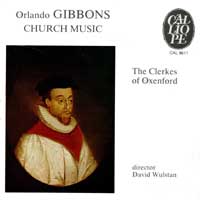
Orlando Gibbons Church Music
The Clerkes of Oxford
David Hulsman, dir.
Enregistré à Oxford en 1975 et 1977. Arpège et Calliope 1987, CAL 9611 (ADD)
Praise the Lord, O my soul ; Lord we beseech thee ; O clap your hands ; Hymnes and songs n° 1, 20, 31, 5, 22 ; O Lord, in thy wrath ; I am the resurrection ; Hymnes and songs n° 9, 13, 67, 47, 18, 24, 3, 4 ; Sec, sec, the word is incarnate ; Hosanna to the son of David ; Sing unto the Lord ; Blessed are all they ; O Lord, how do my woes increase ; Preces and Psalm 145 ; O Lord, I lift my hearth to thee
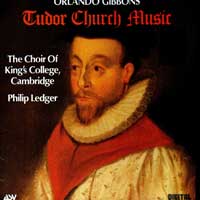
Orlando Gibbons Tudor Church Music The Choir of King's College, Cambridge ; London Early Music Group ; John Butt, orgue ; Philip Ledger, dir.. DCA 514, 1982
Full Anthem: Almighty And Everlasting God ; Magnificat (Short Service) ; Organ: Voluntary ; Nunc Dimittis (Short Service) ; Organ: Fantasia For Double Organ ; Magnificat (Second Service) ; Now Shall The Praises Of The Lord Be Sung (Hymns and Songs of the Church) ; Nunc Dimittis (Second Service) ; Verse Anthem: This Is The Record Of John ; O Lord Of Hosts (Hymns and Songs of the Church ; Verse Anthem: O Thou, The Central Orb ; A Song Of Joy Unto The Lord We Sing (Hymns and Songs of the Church) ; Verse Anthem: See, See, The Word Is Incarnate ; Come, Kiss Me With Those Lips Of Thine (Hymns and Songs of the Church) ; Full Anthem: Lift Up Your Heads ; Organ: Fantasia ; Full Anthem: Hosanna To The Son Of David
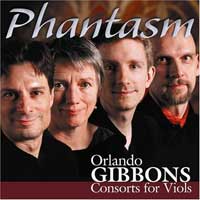
Orlando Gibbons Phantasm : Consort for viols
Laurence Dreyfus (viole soprano) ; Wendy Gillespie (viole soprano) ; Jonathan Manson (viole ténor) ; Markku Luolajan-Mikkola (viole basse). Avec : Susanna Pell (viole ténor) ; Asako Morikawa (viole basse). Enregistré à Oxford, 25-27 septembre 2003. Disqueu IODA, AV0032, 2006. Fantasies a6 : .1. Fantasia V ; 2. Fantasia VI ; 3. Fantasia III ; 4. Fantasia I ; 5. Fantasia II ; 6. Fantasia IV — In Nomines a5 : 7. In Nomine I ; 8. In Nomine II — Virginalms music a4 and a Madrigal a5 9. Peascod Time: The Hunt's Up ; 10. Pavan Lord Salisbury ; 11. Fantasia ; 12. The Silver Swan — Fantasies a3 : 13. Fantasy I ; 14. Fantasy II ; 15. Fantasy III ; 16. Fantasy IV — 17. Anthems a6 : O Lord, In Thy Wrath Rebuke Me Not ; 18. Hosanna To The Son Of David — Dances And Divisions a6 : 19. Pavan ; 20. Galliard ; 21. Go From My Window


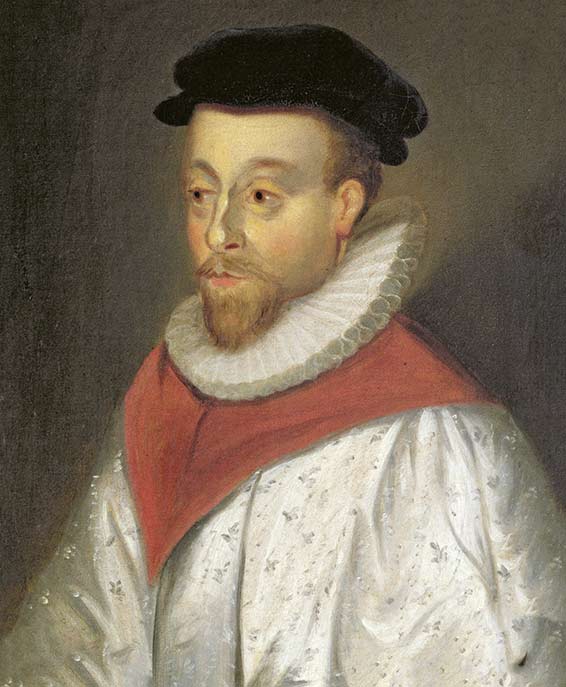
 Orlando Gibbons
 Orlando Gibbons
 Orlando Gibbons
 À propos - contact |
S'abonner au bulletin
| Biographies de musiciens | Encyclopédie musicale | Articles et études | La petite bibliothèque | Analyses musicales | Nouveaux livres | Nouveaux disques | Agenda | Petites annonces | Téléchargements | Presse internationale | Colloques & conférences | Collaborations éditoriales | Soutenir musicologie.org.
À propos - contact |
S'abonner au bulletin
| Biographies de musiciens | Encyclopédie musicale | Articles et études | La petite bibliothèque | Analyses musicales | Nouveaux livres | Nouveaux disques | Agenda | Petites annonces | Téléchargements | Presse internationale | Colloques & conférences | Collaborations éditoriales | Soutenir musicologie.org.